
400G QSFP-DD vs OSFP: Which Form Factor Fits Your Next Deployment?
Form factor, thermal budget and switch port density compared, so you can pick the right 400G module family before you lock in your next switch generation.
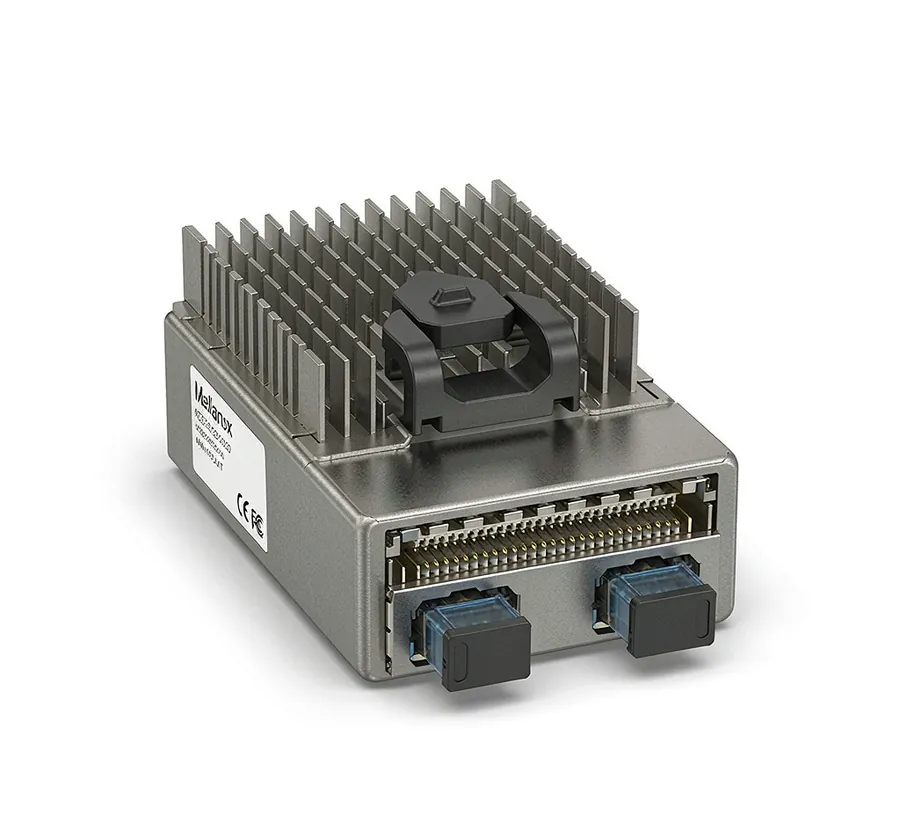
Two form factors, one rate
Both QSFP-DD and OSFP carry 400G as eight 50 Gbps electrical lanes. The difference is not the signal — it is the mechanical envelope, the thermal budget and, indirectly, how much silicon your switch vendor can fit behind each faceplate slot.
QSFP-DD keeps the familiar QSFP footprint and is backward compatible with QSFP28 and QSFP+ slots on most platforms. OSFP is taller and deeper, which buys room for a larger heat sink and, on some designs, a higher-power retimer.
Thermal budget
At 400G, module power sits between 12 W and 16 W depending on reach and whether a retimer is present. That power has to leave the cage through the faceplate, so cage design and switch airflow matter as much as the module itself. If your switch is rated for 12 W cages, a 16 W OSFP module will throttle no matter how good the optics are.
Port density
QSFP-DD doubles the density of a QSFP28 faceplate. OSFP, being wider, typically supports the same number of ports as QSFP28 rather than double. If you are constrained by rack units rather than fibre count, that difference decides the argument on its own.
Which one to pick
Choose QSFP-DD when you need density and backward compatibility with an installed QSFP28 base. Choose OSFP when the platform you have selected requires it, or when the extra thermal headroom is the only way to hit a long-reach target in a hot row.
This article is sample content for layout review. Final copy will be written against your product roadmap.


